Starting your digital marketing journey can feel overwhelming. With so many options, social media, email, Content Marketing, paid ads, and more, it’s easy to wonder which channel is the best fit for your business. The key is not to use every channel at once but to choose the right digital marketing channel that aligns with your audience, goals, and resources.
This guide will help beginners understand how to make that choice in a simple, step-by-step way.
Audience Discovery
The first step in choosing the right digital marketing channel is knowing your audience. Ask yourself:
- Who are my customers?
- Where do they spend their time online?
- What type of content do they prefer, blogs, videos, social posts, or emails?
For example, if your audience is young and highly visual, platforms like Instagram or TikTok might be the best starting point. If your audience is professionals looking for detailed information, LinkedIn or a blog with SEO optimization could be more effective.
Understanding your audience ensures your marketing efforts are focused and efficient. It’s better to reach the right people with the right message than to try to reach everyone everywhere.
Align Channels with Your Goals
Different channels serve different purposes. Before choosing, define what you want to achieve. Some examples:
- Brand Awareness: Social media, YouTube videos, and paid ads help people discover your business.
- Lead Generation: Email campaigns, landing pages, and Google Ads can help capture potential customers.
- Engagement and Loyalty: Social media interactions, newsletters, and community groups keep your audience connected and returning.
Your goals will guide which channels make the most sense. Don’t pick a channel because it’s trendy; pick one because it helps you reach your specific objectives.
Consider Your Resources
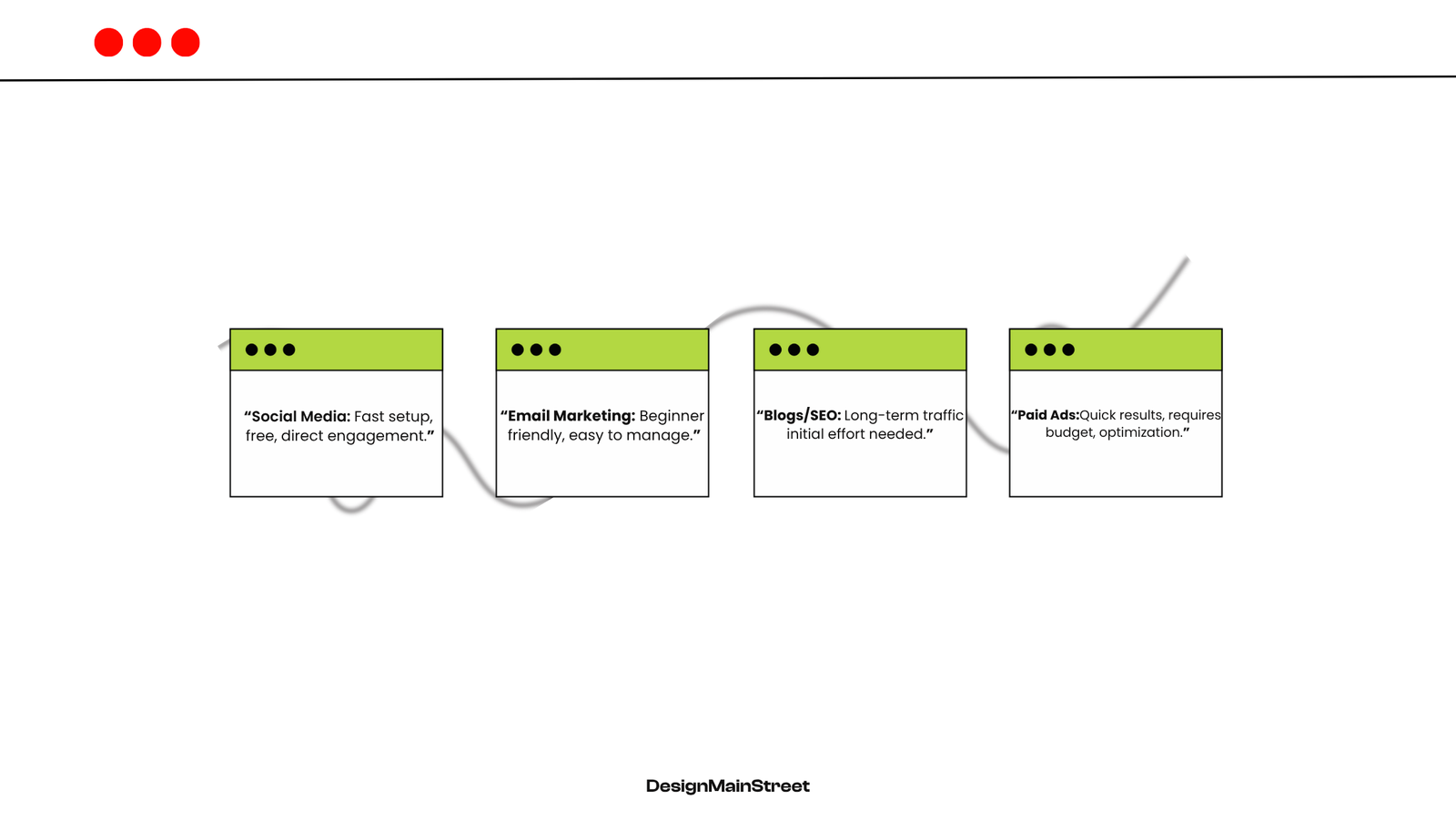
Your available time, budget, and skills are also crucial. Some channels are easier for beginners to start with:
- Social Media: Quick to set up, free to post, and allows direct engagement.
- Email Marketing: Easy to manage with beginner-friendly platforms like Mailchimp.
- Blogs/SEO: Requires more effort upfront but brings long-term traffic.
- Paid Ads: Can bring quick results but requires a budget and ongoing optimization.
Start small, focus on one or two channels, and expand as you gain confidence and results.
Easiest Channels for Beginners
For those starting out, these channels are generally easiest to manage:
- Social Media: Platforms like Instagram, Facebook, and LinkedIn are intuitive and allow you to test different types of content.
- Email Marketing: Sending newsletters to a small list is manageable and helps build a loyal audience.
- Blogging: Creating simple blog posts optimized for search engines can steadily increase your visibility online.
Starting with easy channels allows you to learn, measure results, and scale gradually without feeling overwhelmed.
Step-by-Step Approach to Choosing the Right Channel
- Define Your Audience: Know who you want to reach and where they spend time online.
- Set Your Goals: Decide what you want to achieve, traffic, leads, engagement, or sales.
- Audit Your Resources: Consider your budget, time, and skills.
- Start Small: Pick one or two beginner-friendly channels and focus on them first.
- Measure and Adjust: Track your performance and optimize as you learn what works best.
This simple framework helps beginners make thoughtful, strategic decisions rather than guessing and spreading themselves too thin.
Final Thoughts
- Understand your audience and define your goals to create a focused foundation for your marketing efforts.
- Start with the channels that match your resources and gradually expand as you grow.
- Stay consistent and learn from experience, steady progress matters more than doing everything at once.